

December 2, 2025

Global Action Community Newsletter
Veterans deserve the best smoking cessation support, but that’s not what most receive.
Soldiers give years of their lives to service, which sadly takes a major toll on their mental health. As a result, many wind up picking up smoking—the world’s leading preventable cause of death.
Veterans are around 40% more likely to smoke than the general population. Studies show that during periods of unrest, tobacco use increases across military personnel and the general population alike. It’s often linked to the stress of living in a dangerous environment.
For soldiers enduring constant shelling, blackouts, and battlefield stress, smoking often feels like the only way to cope. In reality, it only deepens anxiety, drains energy, and forms dependence. Quitting smoking under such conditions isn’t just a matter of breaking a habit—it’s a psychological transformation that requires support and the right approach.
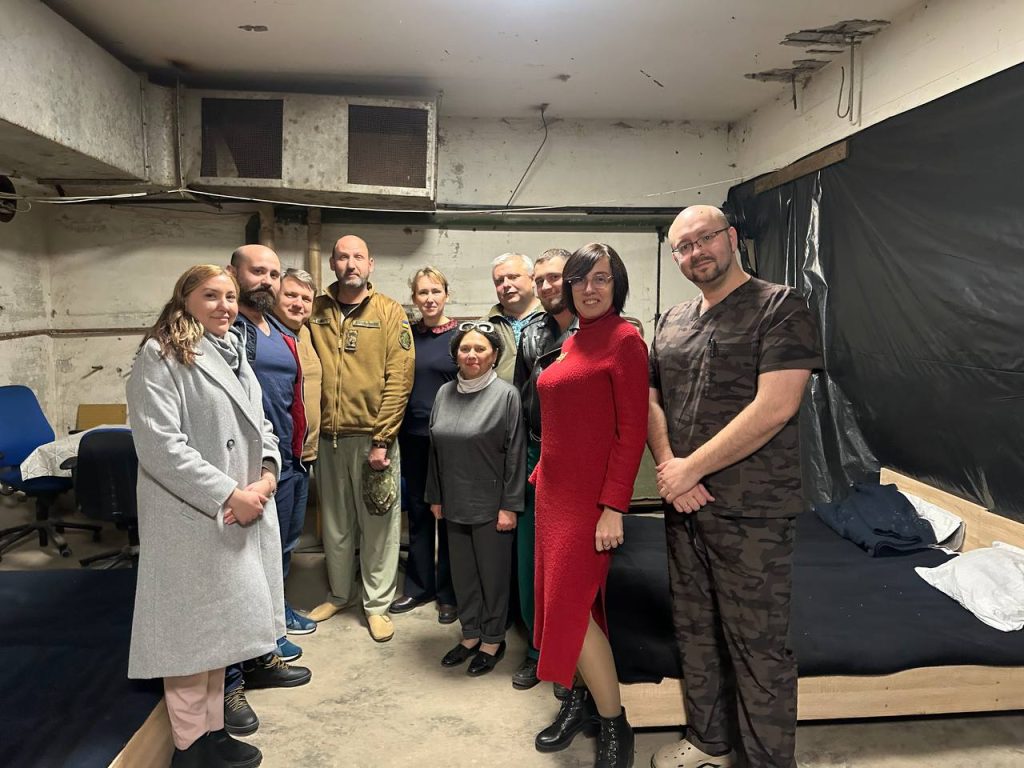
I am the head of Healthy Initiatives, a public health organization that reaches out to this population with compassion and the resources required for someone to quit smoking in a high-stress environment. As a grantee of Global Action to End Smoking, we work in nine countries throughout Eastern Europe and Central Asia to train leaders, such as medical providers and military personnel, on the best practices for helping people to move away from cigarettes.
Submit a question on the latest quitting research, and we may answer it in an upcoming newsletter.

I am especially proud of our recent attention to Ukraine, where years of full-scale war have undone some of the country’s prior progress toward eliminating smoking. In Ukraine, the number of people who smoke has grown by twenty percent since February 2022. Today, one in three Ukranians smoke, including half of all men. This includes both soldiers and civilians who live in the region. Most of those who smoke do so daily.
At Healthy Initiatives, our programs are based on the science of tobacco harm reduction. If someone who smokes isn’t ready to quit completely, we affirm that reducing harm by switching from combustible cigarettes to vapes, heated tobacco products, or nicotine pouches is a meaningful step toward better health. Our approach is backed by research about harm reduction from the global scientific community as well as our own research specific to smoking cessation in conflict zones.
The conflict in Ukraine presents us with an opportunity to uplift soldiers and veterans of war, to reclaim some of the markers of health that combustible tobacco has taken from them. We can return some of what’s lost through war by helping people who live through it to quit smoking.
All my best,

Nadiya Bedrychuk
Head of Healthy Initiatives
By the Numbers
40%
The increased likelihood of veterans to smoke compared to the general population. Healthy Initiatives is working to address the smoking cessation disparities among this population and others affected by geopolitical conflict.
Global Action ANSWERS YOUR QUESTIONS
What should I do if I quit smoking, but I’ve since slipped up?
First and foremost, congratulations on quitting! It’s a huge accomplishment and major step in reducing your risk of disease and death in the long run. You should be proud.
Second, rest assured that a slip-up, or returning to smoking, is a common part of many people’s journeys to quit. It’s a temporary set back, but it doesn’t have to be the end of your story.
The time you spent abstaining from smoking is not a waste. You learned about your relationship to smoking and what works best for you to stop—whether it’s support from loved ones, health care providers, nicotine replacement therapies, or reduced-risk nicotine products like e-cigarettes, heated tobacco products, or nicotine pouches.
The fact that you returned to cigarettes after a period of cessation does not mean you failed. Rather, it is a learning opportunity for you to understand what circumstances led you back to smoking. Perhaps you were in a social situation where others were smoking. Perhaps it was a particularly stressful day.
Whatever the situation, you’re likely to encounter it again. Next time, you can be better prepared. Maybe this means ensuring that you’re prepared with a buddy who will also decline a cigarette in a social situation, or that you’re carrying additional nicotine replacement therapies or reduced-risk nicotine products to help you make it through a tough craving.
Don’t worry about the past—it’s behind you! There’s no better day than today to try again to live a longer, healthier life.
Learn more about all the ways you can quit here.
Thank you for your support

Give the gift of a healthier tomorrow.
We are taking bold action to find global solutions to end death and disease caused by tobacco, particularly combustible cigarettes. We are one of the only public health groups to embrace tobacco harm reduction as the best viable strategy for ending the global smoking epidemic.
We’re proud to support grantees such as Knowledge Action Change, which recently published this free course on tobacco harm reduction.
Your support makes this work possible. Together, we can build a future where no one suffers from tobacco-related disease.
Thank you for your support in the fight against smoking.
Get to Know Global Action
Global Action has awarded more than 175 grants to institutions that support the work of over 100 scientists, covering 46 countries on four continents.
Our organization is an independent, U.S. nonprofit 501(c)(3) grantmaking organization whose mission is to end combustible tobacco use, which remains the leading preventable cause of death globally. Through September 2023, Global Action received charitable gifts from PMI Global Services Inc. Global Action does not seek or accept funding from companies that produce tobacco or non-medicinal nicotine products.
To learn more about our work, visit our website.
Disclaimer: This newsletter does not provide medical advice. The information, including but not limited to, text, graphics, images and other material contained in this newsletter are for informational and educational purposes only and does not constitute providing medical advice or professional services. No material in this newsletter is intended to be a substitute for diagnosing or treating a health problem or disease. Those seeking personal medical advice should consult with a licensed physician or other qualified health care provider. Always seek the advice of your licensed physician or other qualified health care provider regarding a medical condition or with any questions you may have regarding treatment and before undertaking a new health care regimen. Never disregard professional medical advice or delay in seeking it because of something you read in this newsletter. No physician-patient relationship is created by this newsletter. Global Action doesn’t make representations, express or implied, with respect to the information provided here.