
Latest issue
Sent: Feb. 27, 2026

Global Action Community Newsletter
February is Heart Health Month—a time when the world celebrates love and hearts.
But the most powerful act of love you can offer isn’t found in flowers, dinners, or grand gestures—it is the choice to protect your heart from the harm from smoking.
As the co-founder and CEO of Organamet Bio, Inc., a company dedicated to saving lives by bioengineering personalized human hearts, and a member of Global Action’s Board of Directors, smoking cessation is an issue close to my heart.
Every day, your heart beats more than 100,000 times to carry you through your joys, stresses, dreams, and purpose. Heart disease remains the leading killer of men, women, and children worldwide, while smoking cigarettes is the leading preventable cause of death.
Smoking directly damages your heart and blood vessels—not just your lungs. Every cigarette sends toxins into your bloodstream that injure the arteries. Nicotine, the addictive chemical in cigarettes and other tobacco products, forces your heart to beat faster and harder. Long-term, inhaling the smoke from cigarettes exposes your heart and other organs to more than 70 carcinogenic compounds. These cancer-causing agents cause life-threatening damage long before you notice any symptoms.
For women, the danger is even greater. A woman who smokes faces a substantially higher risk of a heart attack than a man who smokes. That risk rises further with hormonal birth control.
Your heart has incredible strength. But even the strongest engines cannot run on fumes.
Your heart’s health is one of the reasons why quitting smoking is so important. And fortunately, the beneficial effects of cessation are almost instantaneous:
- Within 20 minutes: Your heart rate begins to calm.
- Within 12 hours: More oxygen returns to your blood.
- Within 1 year: Your risk of heart attack is cut in half.
You don’t have to quit alone—in fact, there are many tools that can help you quit, including nicotine patches, lozenges, or gum. However, these tools may not be enough for everyone.
Tobacco harm reduction, or switching from combustible cigarettes to alternative forms of nicotine, such as e-cigarettes or nicotine pouches, can help reduce your long-term health risks—including those to your heart. While these products are not risk-free, they eliminate the most dangerous component of cigarettes: smoke.
If you’re thinking about quitting, or you have and you’re struggling, remember that breaking free of cigarettes isn’t just a health choice: It’s an act of radical self‑love and courage, and a declaration that your future matters. You deserve a heart that beats freely for the people and passions you love.
All my best,

Doris Taylor, PhD, FAHA, FACC, FESC, FAIMBE, NAI
Co-founder and CEO of Organamet Bio, Inc.
Board Member, Global Action to End Smoking
By the numbers
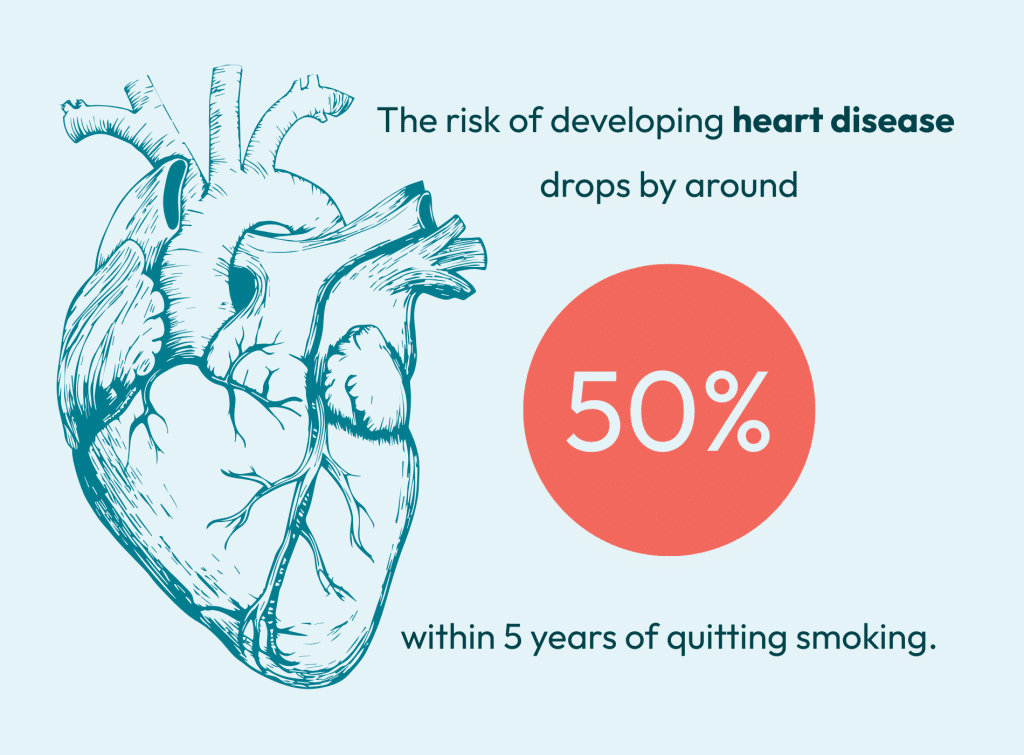
Read the full study here. Global Action is not affiliated with this work.
Global action answers your questions
What’s the best way to stop smoking?
The best strategy to quit smoking is the one that works for you.
Nicotine replacement therapies are popular aids that reduce withdrawal symptoms by providing controlled, low doses of nicotine without the harmful toxins found in tobacco smoke. Additionally, many people have successfully quit smoking with the help of a doctor who can prescribe cessation medications. Others find that talking to a counselor or joining a support group improves their ability to quit. It’s fairly common for people who smoke to use a combination of these methods, too.
However, these solutions may not work for everyone. For those adults who smoke and can’t or won’t quit, alternative solutions such as nicotine e-cigarettes, heated tobacco products, or nicotine pouches can be solutions to help lower long-term health risks due to smoking. Switching from cigarettes to any one of these alternatives is called tobacco harm reduction.
It’s typical for people to make many quit attempts before finding a strategy that sticks—and that’s okay! The important thing to remember is that every attempt is progress. It’s getting you closer to quitting for good.
Learn more about all the ways you can quit here.
Thank you for your support
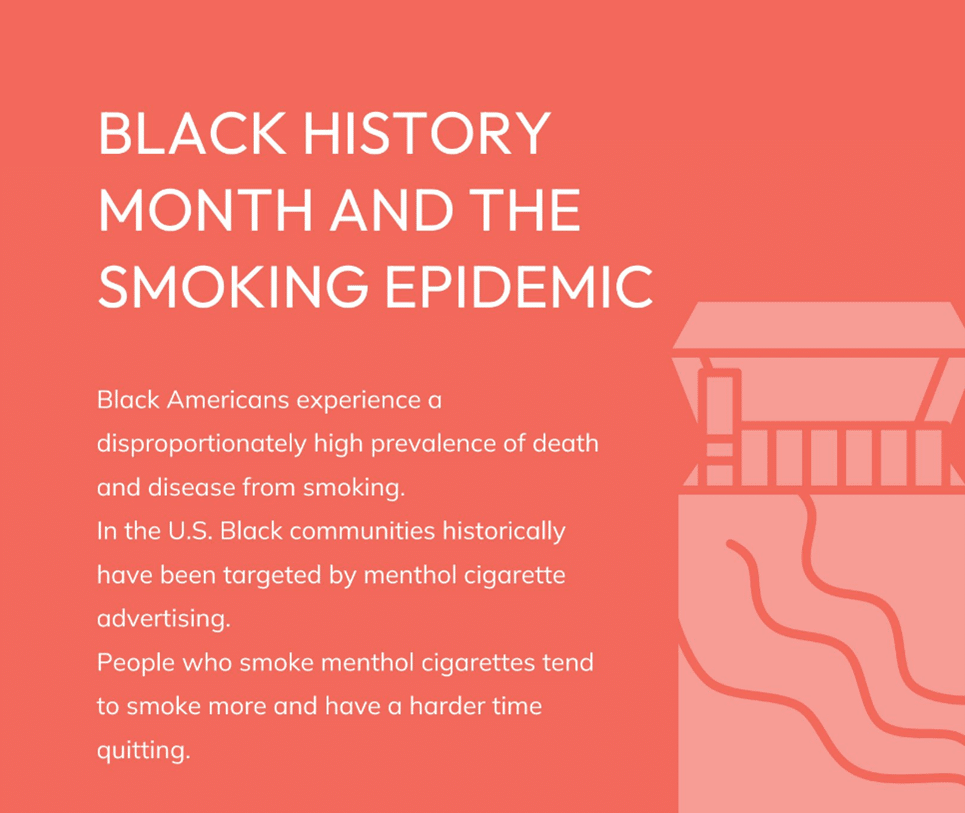
February is Black History Month.
At Global Action to End Smoking we respect all people who smoke and seek creative, evidence-based ways to help them stop smoking and, as needed, move down the continuum of risk.
We are one of the only public health groups to embrace tobacco harm reduction as a means of meeting adults who smoke where they are, showing them empathy in their individual cessation journeys, and helping them—if they cannot or will not quit—to reduce their risks of death or disease from combustible cigarettes.
Your support increases the impact our grantees’ work can have on this cause. Together, we can build a future where no one suffers from tobacco-related disease.
Thank you for your support in the fight against smoking.
Get to Know Global Action
Global Action has awarded more than 175 grants to institutions that support the work of over 100 scientists, covering 46 countries on four continents.
Our organization is an independent, U.S. nonprofit 501(c)(3) grantmaking organization whose mission is to end combustible tobacco use, which remains the leading preventable cause of death globally. Through September 2023, Global Action received charitable gifts from PMI Global Services Inc. Global Action does not seek or accept funding from companies that produce tobacco or non-medicinal nicotine products.
To learn more about our work, visit our website.
Disclaimer: This newsletter does not provide medical advice. The information, including but not limited to, text, graphics, images and other material contained in this newsletter are for informational and educational purposes only and does not constitute providing medical advice or professional services. No material in this newsletter is intended to be a substitute for diagnosing or treating a health problem or disease. Those seeking personal medical advice should consult with a licensed physician or other qualified health care provider. Always seek the advice of your licensed physician or other qualified health care provider regarding a medical condition or with any questions you may have regarding treatment and before undertaking a new health care regimen. Never disregard professional medical advice or delay in seeking it because of something you read in this newsletter. No physician-patient relationship is created by this newsletter. Global Action doesn’t make representations, express or implied, with respect to the information provided here.
Sign up to receive
our monthly newsletter
Newsletter Archive
Issue #16– January 30, 2026:
Issue #15 – December 2, 2025:
Issue #14 – October 31, 2025:
Issue #13 – September 30, 2025:
Issue #10 – June 30, 2025:
Issue #9 – May 30, 2025:
Issue #8 – April 28, 2025:
Issue #7 – March 28, 2025:
Tobacco Harm Reduction Helps People Quit
Issue #6 – February 28, 2025:
Smart Nicotine Policy is a Social Justice Issue
Issue #5 – January 31, 2025:
You’re making progress.
Issue #4 – December 20, 2024:
Advancing science to help people who smoke quit.
Issue #3 – November 26, 2024:
Public Health has to Embrace Complexity to Move Forward
Issue #2 – October 24, 2024:
Read Science like a Scientist
Issue #1 – September 23, 2024:
Welcome to our Community Newsletter