
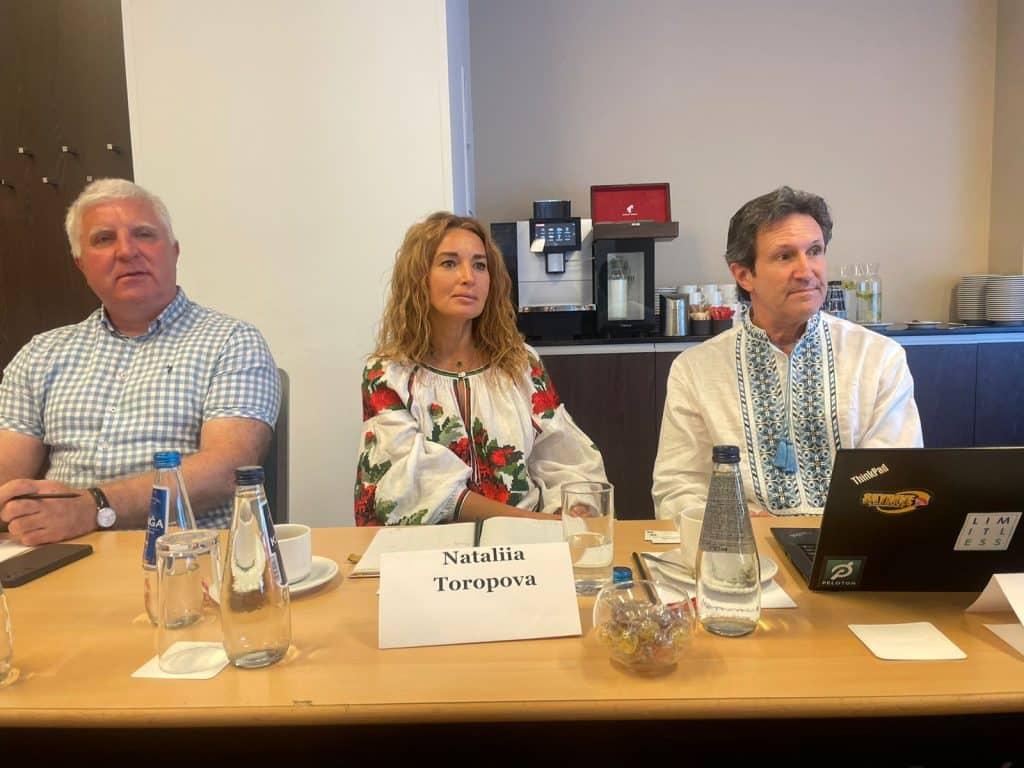
Warsaw, June 18, 2024 – As low excise taxes, disrupted public health programs, and ongoing stress due to conflict exacerbate the smoking epidemic, health experts in Eastern Europe are considering ways to reach people who smoke on more personal levels.
On June 17, nongovernmental organization Healthy Initiatives convened an international forum and luncheon in Warsaw, to discuss how past successes in smoking cessation may inform future challenges. The group included health policy experts from Georgia and Ukraine.
Though countries in the region have largely adapted measures outlined in the World Health Organization’s Framework Convention on Tobacco Control, high rates of smoking – especially among men – linger. The smoking rates continue to rise as the conflict in Ukraine leads to additional stress for individuals as well as public health systems. Illicit cigarette markets continue to grow, while most smoking cessation tools available are traditional nicotine replacement therapies.
Cliff Douglas, President and CEO of Global Action to End Smoking, emphasized the need to adapt smoking cessation resources to the new needs of people who smoke.
“We must learn to meet individuals who smoke where they are on their cessation journeys, and to understand why they are unable to quit with the tools at their disposal. If we continue to push the same approach from two decades ago, we will fail to serve those who continue to smoke, and whose lives are being disrupted by war,”
Cliff Douglas
Leaders discussed what programs or other actions had led to success, and how they could capitalize on these successes in the face of newer challenges. The ongoing instability in the region due to Russia’s invasion of Ukraine has further contributed to the stubbornly high smoking rates, for example.
Andre Urushadze, health policy expert and a former Minister of Health of Georgia, commented, “Tobacco control regulations and restrictions in low- and middle-income countries should follow a risk-proportionate approach so that those smokers who are not able to quit smoking combustible cigarettes will have access to objective and scientifically proven information. It is important to ensure the possibility of proper communication as opposed to the informational chaos and many misleading facts.”
Nataliya Toropova, Founder of Healthy Initiatives, said that her goal of the summit was to inspire leaders in a time when the fight to end smoking is a steep, uphill battle. “We should always strive for saving more lives and helping people to succeed in making healthier choices, especially now when the region is torn by the war and humanitarian crisis, the largest since WWII, and people’s priorities have changed. It is our task to keep up the health issues high up on the agenda and tackle smoking as a number one risk factor for non-communicable diseases. With the help of effective smoking cessation programs and education campaigns, we hope to help people who smoke quit, ultimately making the region smoke-free,” she said.
About Global Action to End Smoking
Global Action to End Smoking is an independent, U.S. nonprofit 501(c)(3) grantmaking organization that supports science-based global efforts to end the smoking epidemic. Our mission is to end combustible tobacco use, which remains the leading preventable cause of death worldwide. Global Action focuses on three main subject areas: Health and Science Research, Cessation Education, and Agricultural Transformation. We collaborate with academic and research centers and others to accelerate life-saving research and educational projects.
Contact:
Toby Denslow, Actum, tdenselow@actumllc.com